Florio Spice Shop’s Cinchona Bark Trade Breakthrough
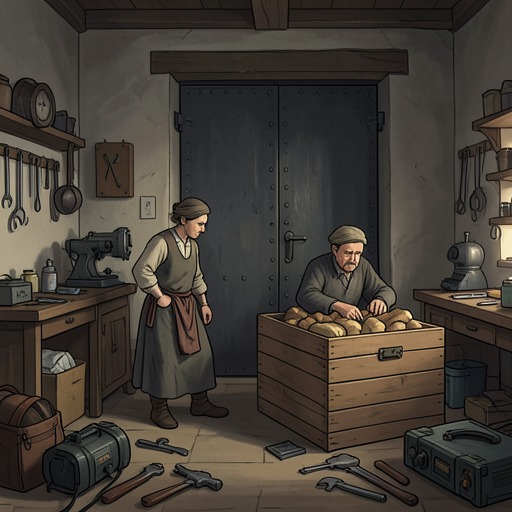
The Florios of SicilyThe Florio Spice Shop’s Cinchona Bark Trade Breakthrough is the moment when a scarce medicinal commodity turns the Florios’ precarious commercial position into visible authority. In the wake of a fever epidemic, Paolo Florio’s shop has bark when established competitors do not; the buyers who come seeking it include the very apothecaries and physicians who had once treated the newcomers with suspicion. Their urgent demand changes not only the shop’s prospects but Paolo’s standing: he recognizes the passage from being a man from Bagnara to being Don Paolo Florio.
Trade and scarcity
The episode rests on a wider economy in which spices and medicinal goods pass through many hands before reaching a counter. A cinnamon stick or gingerroot travels overland and across the sea to European ports, with costs rising at every stage; as a result, both buyers and sellers able to participate in the trade can become wealthy, while medicinal spices remain beyond the reach of many. At the beginning of the nineteenth century, British and French colonial shipping is reshaping a trade once associated with Venice. More ships, more varied goods, and more open harbors expand the market, including in Palermo, where the aromatari have organized a guild.
This wider trade helps explain why local access to bark carries such weight. The Florios’ business does not depend on a single neighborhood counter: they rent guarded warehouse rooms within the Palazzo Steri property, behind the customs offices. There they store spices in transit to other ports or awaiting sale to other merchants. The arrangement lets them defer import tariffs until goods actually enter Palermo, paying rent on storage rather than incurring taxes prematurely. Their inventory includes Indian spices obtained through British channels and goods from French colonies bought through Italian sailors, alongside other high-quality products from around the Mediterranean. The stockroom on Via dei Materassai has become too small, a concrete sign that the firm’s reach is outgrowing its original premises.
The epidemic and the arrival of buyers
At the end of the previous year, a violent fever epidemic brought funerals alongside Christmas observances and drove bark supplies close to exhaustion. Larger apothecaries, including the Canzoneris, could charge extraordinarily high prices for what remained, while many people needed the medicine. Against this backdrop, Paolo Barbaro unexpectedly arrives with a shipment of spices at the new year. The chests fill the shop, and news of the arrival spreads overnight.
The next day, the shop is crowded not only with people seeking medicinal herbs but with commercial rivals: aromatari, smaller apothecaries, and several physicians. They come without their usual confidence, hats off and money in their pockets, asking to buy bark they cannot obtain elsewhere. The reversal is striking because it brings established members of the trade to the Florios’ door as supplicants. The same scarcity that had enabled larger firms to profit now exposes the value of the Florios’ supply and their access to goods.
The contest with Saguto
The turning point becomes public when Carmelo Saguto, passing Piano San Giacomo, sees spice sellers coming and going from the shop and cannot believe that customers trust the Calabrian newcomers. He pushes through the other customers and demands to see the bark, insisting that the buyers must be deceived. Paolo answers not with an argument but by pouring a handful of Peruvian bark onto the counter and declaring that it has just arrived and is already sold out.
Saguto retreats amid the embarrassed looks of the other aromatari and physicians. His contemptuous dismissal does not undo what the crowd has demonstrated: the Florios have the goods, and their customers have already bought them. The following day, the Canzoneris publicize other spices, lower prices, and special terms for loyal customers, but the effort comes after the market has shifted. Paolo’s confidence that a rival’s losses matter less than one’s own survival captures the hard competitive logic he has learned through the episode.
Paolo’s new standing
The commercial victory carries a change in identity. Paolo understands the success as the moment he stopped being simply a man from Bagnara and became Don Paolo Florio. The name is no longer confined to personal ambition: it appears on exchange bills and documents and is countersigned on contracts by storekeepers who have tested the goods and returned to buy from the firm. The bark’s significance therefore lies not just in a successful sale but in the trust and repeat business that follow it.
The breakthrough also establishes a pattern for the Florio enterprise: access to valuable commodities, control of storage and distribution, and the ability to turn crisis into commercial credit. Its achievement is neither effortless nor detached from larger forces. The demand arises from epidemic illness, and the shop’s opportunity depends on trade routes and suppliers shaped by international competition. In this brief reversal, the family’s growing status is measured in practical terms: scarce bark on the counter, buyers at the door, and the Florio name on contracts.